Bringing the Social Aspect Back to Digital Scrapbooking Featured
When scrapbookers first switched from paper albums to working digitally I sometimes heard people say that itseemed like the social aspect of scrapbooking had pretty much disappeared. After all, we were used to piling all of our materials into a bag, box, wheeled luggage, or other sturdy (and absolutely jam-packed) container and lugging it to a friend’s house for a weekly or monthly crop—or for an evening, whenever we could fit it in (and wherever had stairs that weren’t to steep for us to lug our wheeled personal supply warehouses to!). For those of us who still continue to work in tandem on digital and paper scrapbooking projects, we can vouch for the fact that working digitally on canvas prints or photo book projects has been a revolution in terms of supplies. We can now travel light—very light—the only things we now need are functional electrical outlets, a laptop or home computer, a power supply and our memory card or other storage for our digital files. Amazing!

What has happened to the social aspect of things, though? What about all of that idea-sharing, the leafing through each other’s books as we spent an evening trimming, cropping, chatting, laying out page ideas, and adhering photos and embellishments to our pages? Part of what makes using digital scrapbooking software so much more convenient than traditional paper-and-scissors album-making is that you can train yourself on the software or simply work by trial and error to train yourself as you go, so that you improve as you create. You no longer have to wait for the monthly crop to get a whole bunch of new and interesting ideas for you projects. The software is made so that there is lots of choice and also a great deal of room for creativity, but it’s also easy enough for even the most reluctantly Digital among us to succeed at quickly putting together the layout for pages that will in turn quickly become our next printed album.
Making a photo book certainly can be a project you complete on your own. In fact, one of the main advantages of making photo books instead of paper albums is how easy it is to click and fill in pages with digital photos and digital artwork—no outside help or advice required. And you can work anywhere you can use your computer and connect to the net-- but despite all of this it doesn’t have to only be a solitary activity.
Working with a friend, colleague or family member
The most simple kind of collaboration is to create a book with one or two other people. This is fun for friends who’ve shared a vacation or weekend getaway, or for anyone who’s been invited to share in a celebration (baby shower or wedding shower, for example). Best of all is that it takes minimal organization and commitment—just a phone call and a few hours of time to sit down together and create a photo book together!
...
This idea has many fun variations! The best thing is that it is not only for toddlers. Make an alphabet for an older child, and include some of his or her own writing and scanned drawings. Or make a book for yourself or for someone special your alphabet book can be as simple or as embellished and story-packed as you want.
Many of us work chronologically as we work our way through our books and get our most recent and important stories down, but it is really refreshing to get into a project without needing to structure the book based on the date the photo was taken. The beauty of working with a theme such as one family member, a pet, or a special place is that you are free to mix and match photos and journalled stories regardless of when the photos were taken or when the anecdotes occurred. Organize a page another way—by background colour, or number of subjects in each photo; by colour (colour, sepia, or black and white)—or by season, setting, or mood.
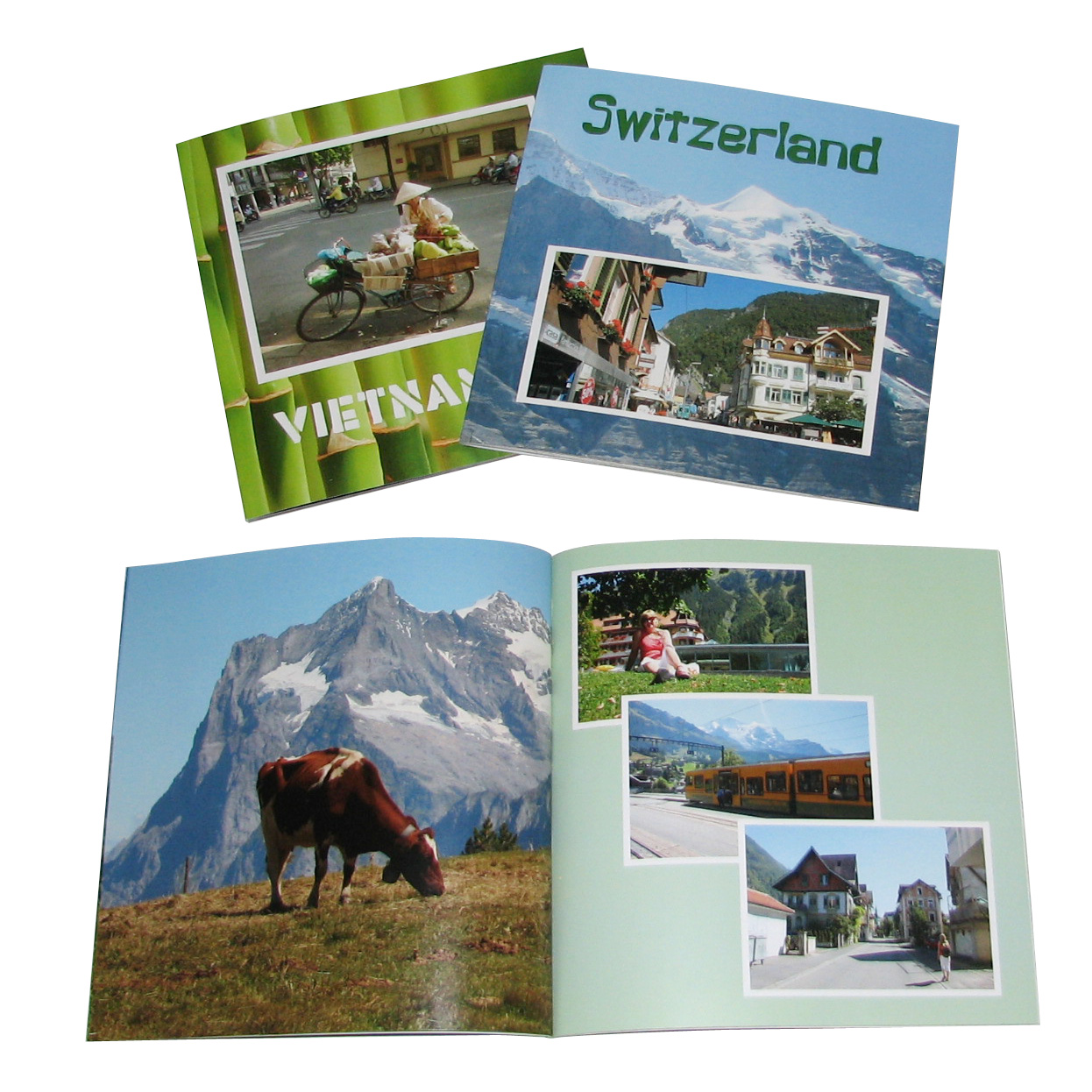
If you choose a place as the central theme for your book, you can be as specific or as general as you want. Your project could be as general as highlighting all the moments in a city you love, or as specific as one special getaway you’ve returned to over the years—for example, a specific beach, a restaurant, campsite, or hotel. Your special object can even be something you usually take for granted but that shows up in many of your childhood photographs as well as your family photographs, such as a pool, a boat, a park, a car (or bike...or scooter...), school, playground, or backyard. If you have something that’s been in the family for several generations, like a cottage or trailer, sports equipment or other objects related to a certain hobby, ask around to see if relatives have photos you could scan and include as well. A variation on this is to choose a wider theme, like “toys that move” or “colours of the rainbow” for a toddler’s book, or something even less specific, like “animals” or “water” and then go from there. When you start on your layouts, stick with one large photo per page if you go for something very specific, say for an entire book about a favourite pet-- and to consider a collage, a mosaic, or strips of photos for larger projects where you need to squeeze in a large number of photos—say, for a photo book about holidays spent at the same place throughout the years. 
Even before the baby is born, you can begin to plan your photo book project. Gather information from a variety of sources, including family members and friends of the family. Include information on the planning that is going on in the family before baby arrives—the preparation of the nursery, for example.